Introduction
In today's digital landscape, having a website is no longer an option it's a necessity. But as you embark on your website journey, you'll encounter a fundamental choice: static vs. dynamic. This isn't just a technical decision; it has significant implications for your business's flexibility, scalability, and cost.
Understanding the core differences between these two types of websites will empower you to make an informed decision that aligns with your business goals and budget. Let's dive in!
What is a Static Website?
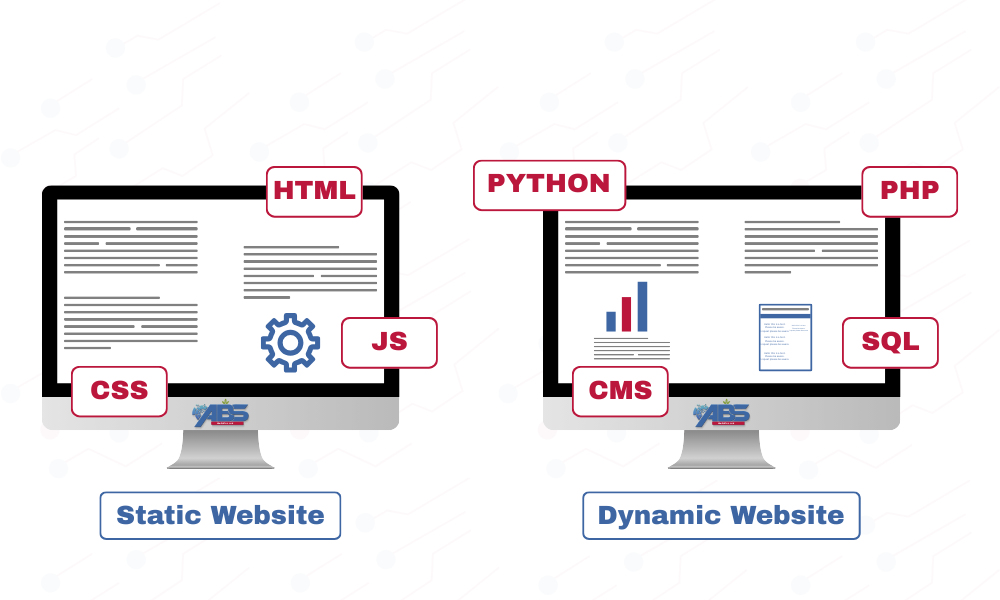
A static website consists of a fixed number of pre-built HTML, CSS, and JavaScript files that are delivered to the user's browser exactly as they are stored on the server. There's no server-side processing when a user requests a page.
Think of it like: A brochure. Once printed, its content remains the same for everyone who reads it, unless you print a new version.
Advantages of Static Websites
1. Speed and Performance
Because there's no server-side processing, static websites load incredibly fast. This leads to a better user experience and can positively impact your SEO.
2. Enhanced Security
With no database or server-side scripting, static sites have fewer vulnerabilities for hackers to exploit, making them inherently more secure.
3. Lower Hosting Costs
Static files can be hosted on simple web servers or Content Delivery Networks (CDNs) at a much lower cost compared to dynamic website hosting.
4. Simpler Development and Maintenance
Development is often straightforward, as it primarily involves front-end coding. Maintenance is also simpler since there are fewer moving parts.
5. Scalability
Static sites can handle a large number of concurrent users with ease, as all requests are simply serving pre-rendered files.
Disadvantages of Static Websites
1. Limited Functionality
Static websites are best for showcasing information. They lack features like user accounts, search functionality, comments, or real-time data updates.
2. Manual Content Updates
Any content change requires a developer to manually edit the HTML files and re-upload them. This can be cumbersome for frequently updated content.
3. Not Ideal for Large, Complex Sites
Managing thousands of static pages and keeping them consistent can become a significant challenge.
What is a Dynamic Website?
A dynamic website generates its content in real-time each time a user requests a page. This is achieved through server-side scripting languages (like PHP, Python, Node.js, Ruby) and databases that store information.
Think of it like: An interactive magazine that customizes its content based on your preferences and current events.
Advantages of Dynamic Websites
1. Rich Functionality
Dynamic websites can offer interactive features such as user logins, personalized content, e-commerce stores, forums, search bars, and content management systems (CMS) like WordPress.
2. Easy Content Management
With a CMS, non-technical users can easily update, add, or remove content without needing a developer. This is a huge benefit for blogs, news sites, and e-commerce platforms.
3. Personalization and Interactivity
Dynamic sites can tailor content and user experiences based on user behavior, location, or preferences.
4. Scalability for Content
Adding new pages or features that rely on a database is much easier than with static sites.
Disadvantages of Dynamic Websites
1. Slower Performance
The need for server-side processing and database queries adds overhead, which can result in slower loading times compared to static sites.
2. Higher Security Risk
With databases and server-side code, dynamic websites have a larger attack surface, requiring more robust security measures and regular updates.
3. More Complex Development and Maintenance
Dynamic sites require full-stack developers and more complex infrastructure, leading to higher development and maintenance costs.
4. Higher Hosting Costs
Hosting a dynamic website typically costs more due to the need for more powerful servers and database management.
Which One Fits Your Business?
The best choice depends entirely on your business needs, goals, and resources.
Choose a Static Website if Your Business:
- Needs a simple online presence: A brochure-ware site, portfolio, or landing page.
- Prioritizes speed and security above all else.
- Has content that rarely changes: (e.g., "About Us," "Contact Us," basic service descriptions).
- Has a limited budget for development and hosting.
- Doesn't require user interaction, e-commerce, or frequent content updates.
Examples: Personal portfolios, small business informational sites, event pages, single-page applications (SPAs).
Choose a Dynamic Website if Your Business:
- Requires frequent content updates: A blog, news site, or resource center.
- Needs user interaction and personalized experiences: E-commerce stores, social networks, membership sites, online courses.
- Relies on a database for storing user data or product information.
- Plans to scale with complex features in the future.
- Has the budget for more complex development, hosting, and ongoing security.
Examples: E-commerce sites (Shopify, WooCommerce), blogs (WordPress), social media platforms, web applications (SaaS).
Hybrid Approaches
It's also worth noting that hybrid approaches exist. Static site generators (SSGs) like Jekyll, Hugo, or Next.js allow developers to build sites that have the benefits of static hosting (speed, security) but can pull data from various sources, making content updates more manageable. For example, you could build a blog using an SSG, writing posts in Markdown, and then generating static HTML files.
Conclusion
Both static and dynamic websites have their unique strengths and weaknesses. There's no one-size-fits-all answer. By carefully evaluating your business's specific requirements for functionality, content updates, budget, performance, and security, you can make an informed decision that sets your online presence up for success.
If you're unsure which path to take, consulting with a web development expert can help clarify your needs and guide you toward the optimal solution for your business.